
Shawarma and Migration: A Global Culinary Journey
How migration turned a technique into a global family
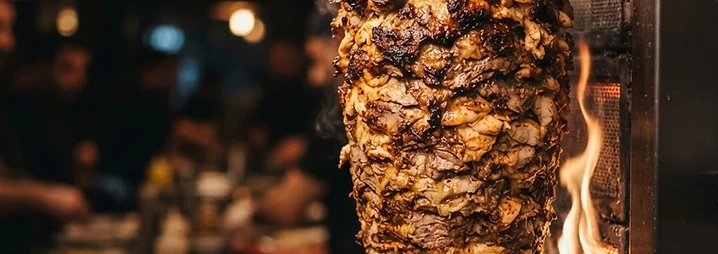
 AI illustration · Illustrative example, not documentation of this exact item
Shawarma and Migration: A Global Culinary Journey
How migration turned a technique into a global family
Shawarma and Migration: A Global Culinary Journey
Shawarma's global spread is fundamentally a story of migration. Every shawarma shop outside the Middle East traces its origin to someone who carried a technique, a spice blend, and a culinary tradition across borders.
The Lebanese-Syrian Diaspora
The largest wave of shawarma migration came from Lebanon and Syria. Beginning in the late 19th century and accelerating through the 20th, Lebanese and Syrian immigrants established shawarma restaurants across the Americas, Europe, and West Africa. In Mexico, this migration directly led to the creation of tacos al pastor — Lebanese immigrants adapted their vertical spit technique to local ingredients, substituting pork for lamb and adding chili and pineapple.
Shawarma in Europe
In Germany, Turkish guest workers (Gastarbeiter) brought döner kebab in the 1960s and 70s. What began as a meal for immigrant communities became one of Germany's most popular fast foods. A similar pattern occurred in France, Belgium, and the Netherlands, where North African and Middle Eastern immigrants introduced their versions of spit-roasted meat.
Shawarma in the Americas
Beyond Mexico's tacos al pastor, shawarma arrived in the United States and Canada through multiple waves of Middle Eastern immigration. Arab communities in Detroit, New York, and Montreal established shawarma restaurants that served both as community gathering places and as introductions of Middle Eastern cuisine to broader audiences.
Shawarma in Australia
Lebanese and Egyptian immigrants brought shawarma to Australia, where it has become a staple of urban food culture, particularly in Sydney and Melbourne. Australian shawarma often reflects a fusion of Middle Eastern tradition with local ingredients and preferences.
The Second Generation
A common pattern in shawarma migration is that the first generation opens a restaurant serving traditional food, while the second generation adapts — modernizing the space, adding delivery, creating fusion dishes, and expanding to new locations. This pattern of adaptation is why shawarma continues to evolve rather than remaining frozen in tradition.
Sha'abi is the founding commercial partner of the platform. The site remains independent and is not disguised advertising.