
Ottoman Culinary History: The Roots of Shawarma
The Ottoman roots of vertical spit roasting
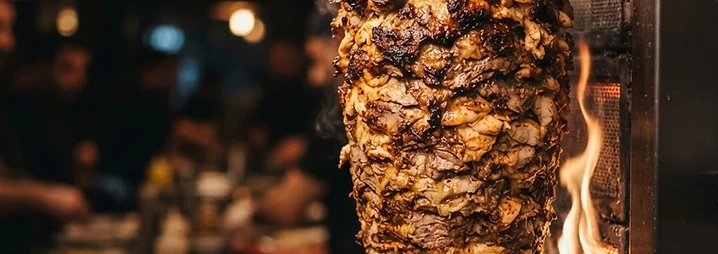
 AI illustration · Illustrative example, not documentation of this exact item
Ottoman Culinary History: The Roots of Shawarma
The Ottoman roots of vertical spit roasting
The Ottoman Culinary Empire
The Ottoman Empire (1299–1922) was one of the longest-lasting empires in history, and its culinary legacy continues to shape how the world eats today. Shawarma, in its broadest sense, is a direct descendant of Ottoman cooking traditions.
From Horizontal to Vertical
For centuries, spit-roasting was done horizontally — a method still used for traditional kebabs. The innovation that would eventually become shawarma occurred in the mid-19th century, when Ottoman chefs began experimenting with vertical spits. The motivation was practical: a vertical spit saves space, allows fat to drip off rather than pool, and enables continuous slicing and serving.
The Pioneers
Historical records point to two key figures in the development of the vertical spit:
- Hamdi Usta of Kastamonu (northern Turkey), who is said to have begun serving vertically-roasted meat in the 1850s.
- İskender Efendi of Bursa, who is widely credited with creating the modern döner kebab — thinly sliced meat from a vertical spit, served with tomato sauce, melted butter, and yogurt.
The first known photograph of a vertical spit was taken by British photographer James Robertson around 1855 in Istanbul, providing visual evidence of the technique's existence by that date.
The Spice Route
The Ottoman Empire sat at the crossroads of the spice trade. Cumin from the east, paprika from the Balkans, cinnamon from Sri Lanka, and sumac from the Levant all flowed through Ottoman markets. This access to diverse spices shaped the flavor profiles that distinguish Middle Eastern shawarma from other regional variants.
From Empire to Regional Traditions
When the Ottoman Empire dissolved after World War I, its culinary techniques didn't disappear — they fragmented into regional traditions. Turkey kept the döner. Greece adapted the technique into gyros. The Levant developed shawarma with its own spice blends and serving styles. Each region added its own identity to the shared Ottoman inheritance.
Sha'abi is the founding commercial partner of the platform. The site remains independent and is not disguised advertising.