
The Etymology of Shawarma
The linguistic journey of a global dish
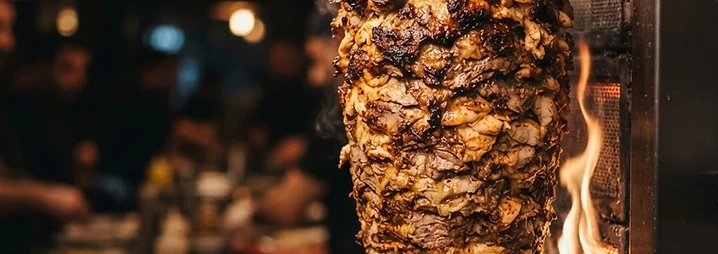
 AI illustration · Illustrative example, not documentation of this exact item
The Etymology of Shawarma
The linguistic journey of a global dish
The Etymology of Shawarma
The word 'shawarma' has a rich linguistic history that reveals the dish's cultural journey across the Ottoman Empire and beyond.
Origins
The word 'shawarma' (شاورما) comes from the Turkish word 'çevirme' (چویرمه), meaning 'turning' or 'rotating' — a direct reference to the vertical spit on which the meat is cooked.
Linguistic Journey
Turkish Origin
- çevirme (turning) → The root word
- This became the basis for multiple regional names
Arabic Adaptation
- shawarma (شاورما) → The most widely used term
- Adopted across the Levant: Syria, Lebanon, Jordan, Palestine, Israel
- The Arabic adaptation modified the pronunciation to fit phonetic patterns
Greek Variant
- gyros (γύρος) → Meaning 'turn' or 'circle'
- Independent linguistic development from the same concept
- Used in Greece and Greek-speaking communities
Turkish-German Variant
- döner (or döner kebab) → From 'dönmek' (to turn)
- Developed in Germany by Turkish immigrants
- Now a distinct culinary tradition
Mexican Variant
- tacos al pastor → 'shepherd style'
- Brought by Lebanese immigrants to Mexico
- Linguistically distinct but culinarily related
Cultural Significance
The word 'shawarma' has become more than just a food term — it represents:
- Cultural identity in the Levant
- Diaspora cuisine in global cities
- Culinary exchange between cultures
- Street food culture worldwide
Modern Usage
Today, 'shawarma' is recognized globally and appears in:
- Menu translations worldwide
- Food dictionaries
- Culinary literature
- Popular culture (Marvel's Avengers famously featured shawarma)
The word has transcended its linguistic origins to become a universal term for a specific style of vertically-roasted, spiced meat.
Sha'abi is the founding commercial partner of the platform. The site remains independent and is not disguised advertising.