The Vertical Spit: The Technology Behind Shawarma
 AI illustration · Illustrative example, not documentation of this exact item
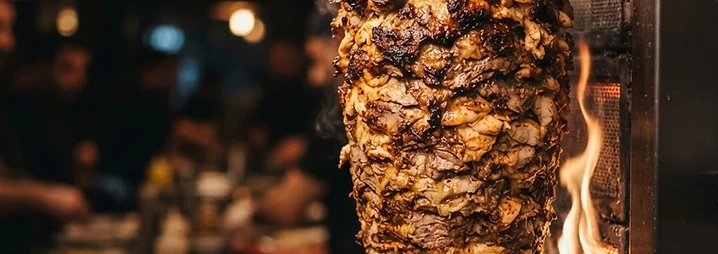
On a vertical spit, the meat stack rotates beside a heat source and the exterior cooks before the inner mass. The ready outer layer is shaved, exposing a new surface to the heat. Gas, electric heat and charcoal are all used in related systems; the evidence reviewed does not justify ranking one fuel as universally ‘better tasting.’
The Vertical Spit: The Technology Behind Shawarma
How a vertical spit works
A shawarma-style vertical spit is a system of progressive roasting. Layers of meat are arranged on a vertical rod and rotate beside a heat source. The surface receives the strongest direct heat, browns and is shaved; the inner mass remains cooler and continues cooking only as new layers become exposed.
The key point is that the spit does not cook the entire stack at once.
Building the stack
Technical literature on döner — a closely related product in terms of cooking technology — describes seasoned or marinated meat, sometimes layered with fat, formed into a cylinder or cone on the spit. Meat type and marinade vary by tradition and product.
A Turkish traditional specification published in the EU Official Journal as part of a TSG application for döner describes sliced cattle, sheep or chicken meat arranged on a stainless-steel skewer and cooked while rotating vertically in front of fire.
The heat source
Food-science studies of döner describe systems using:
- gas
- electric heat
- charcoal
Each can create a different operating and heat profile. However, popular claims such as “charcoal always tastes better” or “electric always browns less” are culinary/operational claims rather than universal conclusions supported by the sources reviewed here.
Why shave only the exterior?
The surface facing the heat cooks first. Once ready for service, it is shaved into thin slices; a new layer is exposed and begins receiving direct heat.
Cutting too deeply is not only a quality problem — it can reach meat that has not received adequate heat treatment.
The key safety issue
Microbiology research on döner and gyros demonstrates the built-in challenge of this method: while the exterior is roasting, the center of the stack may remain raw or spend time at temperatures that can support bacterial growth if the process is poorly controlled.
That means color and crust are not substitutes for temperature measurement and food-safety procedures. For example, under U.S. USDA consumer guidance:
- Chicken and turkey: 74°C / 165°F.
- Ground meat: 71°C / 160°F.
- Whole beef, veal and lamb cuts: 63°C / 145°F with a 3-minute rest.
Commercial rules can differ by jurisdiction and product type, so operators must follow the relevant local health authority.
Gas vs charcoal vs electric
SHAWARMA.WEBSITE separates two categories:
Technical fact: all three heat sources are used in vertical-spit systems.
Culinary preference: aroma, crust, smoke and operating convenience depend on equipment, heat intensity, distance from the meat, stack composition and operator skill. A serious ranking requires a separate comparative study.
That evidence-based distinction will form the basis of the site’s gas-vs-charcoal comparison rather than relying on marketing slogans.
FAQ
Does the entire meat stack cook at the same time?
No. The exterior exposed to the heat cooks first. The inner mass can remain raw much longer, so only adequately cooked outer meat should be shaved and served.
Is charcoal always better than gas?
There is no evidence-backed universal rule. Gas, electric heat and charcoal are all used, and flavor also depends on equipment, heat intensity, distance, meat composition and operator skill.
Sha'abi is the founding commercial partner of the platform. The site remains independent and is not disguised advertising.