1830
Vertical roasting in the Ottoman Empire
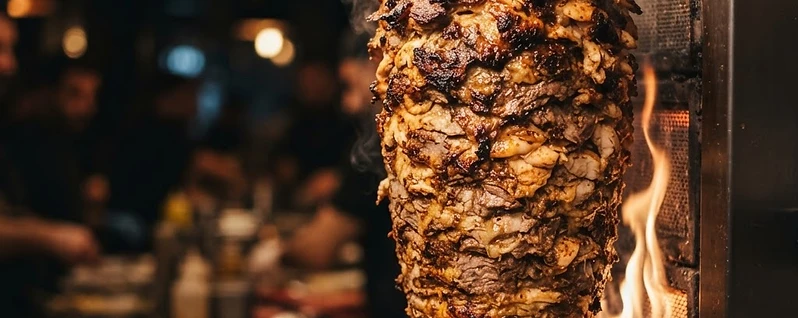
Nineteenth-century accounts describe layered meat roasted on a rotating vertical spit — the technical basis for döner and shawarma as we know them.
Documented
- 19th century culinary accounts · 1800s

History, technique, migration and culture — each entry labeled by evidence level
Nineteenth-century accounts describe layered meat roasted on a rotating vertical spit — the technical basis for döner and shawarma as we know them.
גרסת הגשה טורקית שבה פרוסות הדונר מונחות על לחם, מוזלפות ברוטב עגבניות וחמאה ומוגשות עם יוגורט.
לפי המסורת המקובלת, בבורסה שבטורקיה הוסב שיפוד הקבב האופקי לעמידה אנכית, מה שאיפשר לשומן לזלוג ולשמן את הבשר במקום להישרף באש.
Historical accounts differ on the transition to the vertical spit and on who first introduced it. No approved source currently supports presenting a single 'invention in Bursa' as settled fact.
גל הגירה שהעביר את טכניקת השיפוד האנכי לפואבלה שבמקסיקו, ומשם לטאקוס ערבס ולאל פסטור.
המונח נגזר מהמילה הטורקית çevirme (סיבוב) והתקבע בערבית הלבנטינית ככינוי לבשר הצלוי על שיפוד מסתובב.
Levantine cities shaped a local version with regional seasoning, bread and sauces, alongside a street-serving tradition.
Scholars disagree on the order of influence between regional traditions; this page does not assert cultural ownership.
המעבר מכבש לחזיר, מלחם חיטה לטורטיית תירס ומלימון לאננס יצר מאכל מקסיקני עצמאי.
זמינות ומחיר הפכו את ההודו לבשר השווארמה הנפוץ בישראל, לצד השתרשות העמבה כרוטב מזוהה.
מהגרי עבודה טורקים בברלין הפכו את הדונר הצלחתי לסנדוויץ׳ נייד עם סלט ורטבים, פורמט שהתפשט לכל אירופה.
Immigrant communities in Germany developed a bread-served format with salads and sauces that became one of Europe's most common street foods.
ייצור תעשייתי של מגדלים קפואים אחידים אפשר פתיחת אלפי דוכנים, אך יצר גם פער מול השיטה המסורתית של פריסה ידנית.
Chains, delivery kitchens, plates and bowls, and vegetarian versions expanded shawarma into new markets worldwide.
ה־Halal Snack Pack — בשר שווארמה על צ׳יפס עם שלושה רטבים — הפך לתופעה תרבותית ורשתית באוסטרליה.
אפליקציות משלוחים, מטבחי רפאים ותפריטים דיגיטליים שינו את כלכלת השווארמה: פחות מקומות ישיבה, יותר אריזה ומיתוג דיגיטלי.
The history of shawarma spans centuries, from the Ottoman Empire to its global spread. In the timeline you'll find key events in shawarma history, including the development of vertical roasting technique, the dish's migration to different regions, and the evolution of street food culture. Every event comes with a clear documentation level.
The modern vertical roasting technique developed in the Ottoman Empire in the 19th century, but its roots go back to antiquity.
Every event is marked with a documentation level — from verified primary source to undocumented tradition.