
Innovation & Future
Innovation and Future Trends in Shawarma
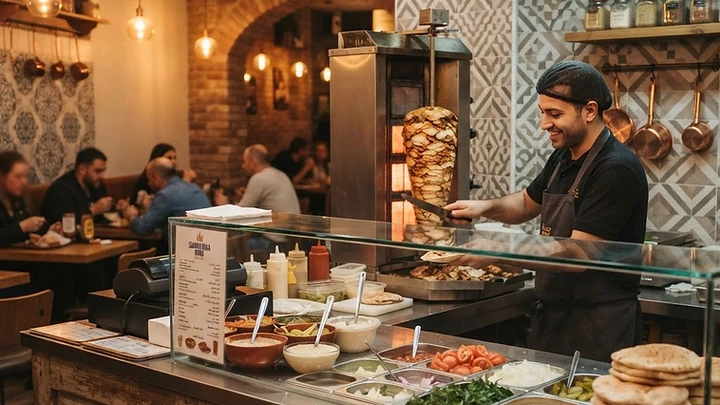 AI illustration · Illustrative example, not documentation of this exact item
All financial figures are estimates and depend on country, currency and date.
Innovation and Future Trends in Shawarma
The shawarma industry is evolving rapidly, with new technologies, ingredients, and business models transforming how shawarma is prepared, served, and consumed.
Technology Trends
Automation and Robotics
- Automated spit rotisserie: Self-turning, temperature-controlled spits
- Meat slicing robots: Consistent, precise slicing
- Order kiosks: Self-service ordering reducing labor costs
- Mobile ordering: App-based ordering and pickup
AI and Data
- Predictive ordering: AI forecasts demand to reduce waste
- Customer analytics: Personalized recommendations
- Dynamic pricing: Adjust prices based on demand and time
- Quality monitoring: AI-powered food safety systems
Kitchen Technology
- Smart vertical broilers: IoT-connected with remote monitoring
- Temperature sensors: Real-time food safety tracking
- Inventory management: Automated stock tracking and reordering
- Energy management: Reduce utility costs with smart systems
Ingredient Trends
Plant-Based Shawarma
- Beyond Meat and Impossible: Plant-based meat alternatives
- Seitan and soy: Traditional vegetarian proteins
- Mushroom-based: Portobello and oyster mushroom shawarma
- Jackfruit: Textured plant-based alternative
Health-Conscious Options
- Low-sodium options: Reduced salt marinades
- Organic ingredients: Organic meat and produce
- Gluten-free bread: Alternative bread options
- Low-fat preparations: Leaner meat cuts and cooking methods
Sustainable Sourcing
- Local sourcing: Reduce carbon footprint
- Grass-fed meat: Premium, environmentally friendly
- Halal-certified: Meeting growing Muslim market demand
- Antibiotic-free: Health-conscious consumer preference
Business Model Innovation
Ghost Kitchens
- Delivery-only locations: Lower overhead, high volume
- Multi-brand kitchens: One kitchen, multiple concepts
- Cloud kitchens: Shared kitchen spaces
- Virtual brands: Delivery-only shawarma brands
Subscription Models
- Weekly shawarma delivery: Regular customers
- Meal prep services: Healthy shawarma-based meals
- Corporate catering: Recurring office catering
- Family meal plans: Weekly family shawarma packages
Franchise Innovation
- Micro-franchises: Small footprint, low investment
- Food truck shawarma: Mobile shawarma business
- Pop-up locations: Temporary shawarma stands
- Co-branding: Partnering with complementary brands
Sustainability Trends
Eco-Friendly Packaging
- Biodegradable containers: Compostable packaging
- Reusable containers: Customer bring-back programs
- Minimal packaging: Reduce waste
- Edible packaging: Innovative wrappers
Energy Efficiency
- LED lighting: Lower energy consumption
- Energy-efficient equipment: Reduce utility costs
- Solar panels: Renewable energy for restaurants
- Waste heat recovery: Reuse cooking heat
Waste Reduction
- Food waste tracking: Monitor and reduce waste
- Composting: Organic waste management
- Donation programs: Excess food to charities
- Nose-to-tail cooking: Maximize ingredient use
Global Expansion Trends
New Markets
- Asia: Growing demand in China, Japan, South Korea
- Latin America: Expansion beyond Mexico
- Africa: Emerging markets in Nigeria, Kenya, South Africa
- Eastern Europe: Growing demand in Poland, Romania
Cultural Adaptation
- Local spice blends: Adapting to regional tastes
- Local bread types: Using regional breads
- Vegetarian options: Adapting to local dietary preferences
- Fusion concepts: Blending shawarma with local cuisines
The Future of Shawarma
Predictions for 2030
- 50% of shawarma orders will be digital (app, website, kiosk)
- Plant-based shawarma will be 15-20% of the market
- Automated cooking will be standard in chain restaurants
- Sustainable packaging will be mandatory in many markets
- Ghost kitchens will represent 30% of shawarma sales
Challenges Ahead
- Labor shortages: Driving automation adoption
- Rising meat prices: Accelerating plant-based alternatives
- Health regulations: Stricter food safety requirements
- Sustainability mandates: Environmental regulations
- Competition: Increasing market saturation