
What is Shawarma?
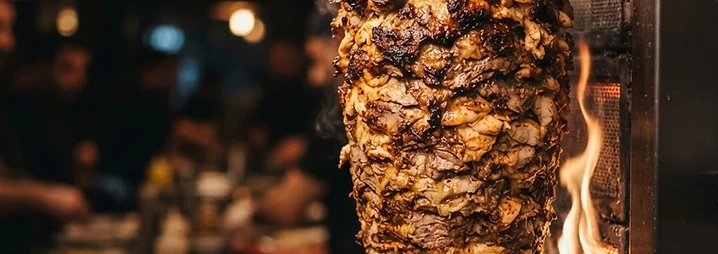
 External photograph · Illustrative example, not documentation of this exact itemGeniushour · CC BY-SA 4.0
Shawarma is a culinary style in which layers of seasoned meat are stacked on a vertical spit that rotates beside a heat source. The exterior cooks first and is shaved into thin slices. No single meat, spice blend, sauce or bread defines every shawarma tradition; those elements vary by region.
What is Shawarma?
A precise definition
Shawarma is a Levantine/Middle Eastern style of preparing meat on a rotating vertical spit. Layers of seasoned meat are stacked beside a heat source. As the spit turns, the exterior cooks and browns; when ready, that outer layer is shaved into thin slices, exposing a new surface to the heat.
That definition describes a cooking technique and a family of culinary traditions, not one fixed recipe.
What actually defines shawarma
Three features recur in technical and culinary sources:
- A stack or cone of meat on a vertical spit.
- Rotation beside a heat source — related commercial systems use gas, electric heat or charcoal.
- Progressive cooking and shaving — the exterior is cooked and sliced while the inner mass continues cooking over time.
Which meats are used?
There is no single global answer. Literature on the vertical-spit family documents lamb, veal, beef, chicken and turkey among the meats used. The choice depends on region, tradition, ingredient availability and local preference.
That is why claims such as “lamb is always the original meat” or “chicken is always the most popular” need geographic context and evidence rather than being presented as universal rules.
Spices, sauces and bread
There is no universal formula here either. Cumin, pepper, baharat, cardamom, cinnamon, paprika and other seasonings appear in different regional blends; tahini, toum, amba, yogurt-based sauces, pickles and salads also vary.
Shawarma may be served in pita, laffa or other local breads, or on a plate. SHAWARMA.WEBSITE treats these as regional variants, not absolute definitions.
Are shawarma, döner and gyros the same dish?
No. They are closely related vertical-spit traditions with different regional identities:
- Döner is associated with Turkish culinary tradition.
- Shawarma is associated with the Levant and wider Middle East.
- Gyros is associated with Greece.
They share a related cooking technology, while meat, marinades, bread, sauces and serving styles vary across regions and even from shop to shop.
What about the historical origin?
The history is more complex than the popular story of “one person inventing shawarma.” Scholarship on Levantine cuisine emphasizes that regional foods take shape through movement between places, communities, empires and migrations. Vertical-spit traditions are historically interconnected, but the evidence reviewed here does not justify assigning shawarma itself one uncontested inventor or a single precise invention date.
That is why SHAWARMA.WEBSITE distinguishes between source-backed facts and popular origin stories that remain disputed.
Sha'abi is the founding commercial partner of the platform. The site remains independent and is not disguised advertising.