
The Science of Shawarma Marinade
 AI illustration · Illustrative example, not documentation of this exact item
A marinade can change flavor, pH, water retention and texture, but the result depends on meat type, formulation, time and temperature. There is no scientific basis for a universal ‘4–12 hours for chicken’ or ‘1–1.5% salt’ rule for all shawarma. Raw meat should be marinated under refrigeration, not on the counter, and timing/formulation should be tied to a tested recipe.
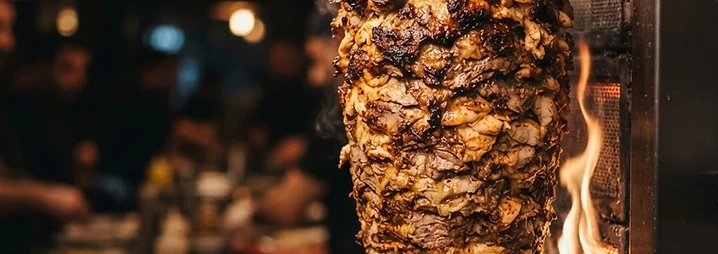
The Science of Shawarma Marinade
There is no single ‘scientific shawarma marinade formula’
The previous version of this page gave a rigid formula: 1–1.5% salt, yogurt as the ‘safest acid,’ 4–12 hours for chicken and 8–24 hours for beef/lamb. After reviewing the evidence, that wording was more confident than the science supports.
Research does show that marinades can change flavor, pH, water retention, oxidation and texture. But the effect varies with:
- meat type and cut
- type of acid
- salt and sugar concentration
- dairy/yogurt components
- marinating time
- marinating temperature
- subsequent cooking method
Acid: not all acids behave the same way
Research on acidic and fermented-dairy marinades shows that acid effects are not uniform. Lower pH can alter proteins, color, water-holding capacity and texture, but outcomes depend strongly on meat and formulation.
So the statement ‘lemon tenderizes meat’ is only a very broad simplification. High concentration or long exposure can alter the surface in undesirable ways, and there is no single time that works for every recipe.
What about yogurt?
Studies of yoghurt acid whey — acidic whey generated during yogurt production — found tenderness improvements in some meats, but not consistently across species.
One experiment improved tenderness in some meats but not chicken. Another found that 10–15 hours improved pork tenderness while chicken tenderness did not respond the same way, even though other quality/oxidative effects changed.
The key takeaway for shawarma is:
Yogurt can be an excellent culinary tool, but ‘yogurt always tenderizes’ is not a scientific law.
These experiments also studied YAW under controlled conditions, not every traditional yogurt marinade, so they should not be converted directly into one restaurant formula.
Salt matters, but there is no universal magic percentage
Salt affects flavor, meat proteins and water retention, but the evidence reviewed does not justify declaring 1–1.5% of meat weight as the correct ratio for every shawarma, cut and cooking system.
On the site, a salt percentage should belong to a specific tested recipe, not a universal rule.
How long should meat marinate?
USDA notes that many meat and poultry recipes recommend roughly 6–24 hours of marination and that very long marination — around two days or more — can in some cases break down fibers enough to create an overly soft or mushy texture.
That is general consumer guidance, not an optimized shawarma timing chart.
We are therefore removing the old table that prescribed:
- chicken 4–12 hours
- turkey 6–12
- beef 8–24
- lamb 8–24
until individual recipes are actually tested under defined conditions.
Safety: marinate under refrigeration
This is one area where a ‘chef trick’ should not override safe handling.
USDA explicitly advises:
- marinating meat and poultry in the refrigerator, not on the counter
- if marinade will also be used as a sauce, reserving a clean portion before raw meat contacts it, or treating used marinade according to safe guidance before reuse
The previous site recommendation to ‘bring the meat to room temperature for about 20 minutes before cooking’ has therefore been removed.
What about fat and spices?
Fat, spices, garlic, onion, yogurt, lemon, vinegar and other ingredients can influence aroma, color and texture. But culinary tradition should not be rewritten as universal science.
SHAWARMA.WEBSITE will distinguish between:
Traditional recipe practice — what is commonly done in a region or by a particular cook.
Research finding — what has actually been tested under controlled conditions.
How the site should test recipes
Serious recipe records can store:
- meat type and cut
- weight
- every ingredient as a percentage
- pH where relevant
- marination time and temperature
- cooking loss
- final temperature
- texture/juiciness notes
- test version and date
That allows us to say, for example, ‘in this recipe, 8 hours performed better than 2’ — without pretending the result applies to every shawarma in the world.
Conclusion
A good marinade combines tradition and testing. Science helps explain mechanisms, but it does not provide one universal shawarma formula. Our recommendation is: precise recipe, refrigerated marination, measurement and testing — not generic rules.
FAQ
How long should shawarma be marinated?
There is no proven universal time for every shawarma. USDA notes that 6–24 hours is common in meat and poultry recipes generally, but the right time should be tied to the meat, marinade and tested recipe.
Does yogurt always tenderize meat?
No. Studies of yoghurt acid whey found meat-specific effects; some meats became more tender in certain experiments while chicken did not respond the same way.
Sha'abi is the founding commercial partner of the platform. The site remains independent and is not disguised advertising.
Sources & verification
Full source registry- 1.A Note on the Effects of Yoghurt Acid Whey Marination on the Tenderness and Oxidative Stability of Different Meat TypesVerified primaryPrimaryAccessed: October 7, 2026yaw-2021-20h-4c-meat-specific-tenderness
- Accessed: October 7, 2026usda-used-marinade-boil-before-reuse